

One Executable Contract Engine. Two Revenue-Integrity Surfaces.

Clinical Speed begins with the payer agreements that define reimbursement. Once validated and digitized, those contract models can support historical 835 recovery, ongoing remittance analysis, and pre-submission 837 intelligence.

Request a Discovery Call
Analyst reviewing Clinical Speed contract analytics on multiple monitors
Clinical team member reviewing payer contracts at a laptop

Comprehensive Contract Digitization

Clinical Speed digitizes the payer contracts submitted for the engagement into precise financial calculators. Contract coding captures the values and provisions that govern payment, including modifiers, fee schedules, policy terms, carve-outs, stop-loss language, lesser-of provisions, case rates, per diems, percentage-of-charge terms, and applicable attachments. Contracts are validated before coding begins, and coding and digitization typically takes four to six weeks from a complete contract set.

835 Forensic Underpayment Recovery

Historical Remittance Analysis

Clinical Speed typically analyzes 12 to 24 months of 835 remittance data against the contract language in force on each date of service, including historical contract versions that may since have been amended or expired.

Denials and Small-Balance AR

The forensic recovery process can also review flagged denials and small-balance underpayments within the same recovery workflow, allowing contract-driven findings to be evaluated at scale.

Line-Level Forensic Reconciliation

The engine compares actual reimbursement with contract-executed expected reimbursement at line level. Findings are organized as structured underpayment records containing the variance, contractual basis, and evidence required for review and appeal.

Ongoing Reporting

Clients submit new EOBs on an ongoing cadence. Clinical Speed publishes weekly reporting with claim-status updates, recovered-fund visibility, and remaining opportunity so the recovery book stays current.

Automated Appeals & Recovery Management

After the healthcare organization verifies the findings, validated underpayments move into the appeal platform. Appeal generation is AI-assisted and structured, with resubmission, payer-response handling, status tracking, and ongoing recovery management.

835 Commercial Model

The standard 835 recovery engagement is contingency-based. Clinical Speed receives 30% of recovered funds after those dollars are reconciled and posted to the client’s accounts. There is no upfront license fee and no separate professional-services invoice for the standard recovery cycle. If nothing is recovered, nothing is owed on that recovery stream.

837 Pre-Submission Contract Intelligence

The 837 capability is the upstream extension of the same contract engine. Outbound 837P and 837I claims can be evaluated against the applicable payer contract before transmission, or immediately after generation depending on the organization’s integration point.

Contract-Aware Pre-Submission QA

Evaluate outbound claims against the executed contract and return expected allowed amounts, clause references, variance risk, missing elements, modifier dependencies, and bundling conflicts.

Denial and Underpayment Risk Intelligence

Historical adjudication patterns and contract logic can identify likely denial causes, payer failure modes, modifier-dependent rejections, and documentation-threshold failures. Risk intelligence is based on the organization’s own contracts and remittance history.

Evidence Packs and Payer-Aligned Data

When contract logic is triggered, Clinical Speed can produce supporting evidence identifying the relevant payer rules, required claim elements, missing indicators, and documentation categories. The healthcare organization retains control over whether and how the evidence is used.

Advanced Charge-Leakage Reconciliation

Advanced analysis can reconcile clinical events, charge-router output, posted transactions, and final claim lines to surface potential unbilled services, unit mismatches, revenue-code gaps, and under-coding. The output remains report-only, and coding decisions remain with coders and HIM.

Expected Reimbursement

The engine can produce total and line-level expected allowed amounts through deterministic contract execution. The expected allowed used before submission is based on the same contract model later used to benchmark the 835 remittance.

Report-Only by Design

  • No automatic claim modification.
  • No automated coding changes.
  • No billing writeback.
  • No documentation interpretation that replaces clinical judgment.
  • No replacement of the organization’s coding, HIM, revenue integrity, compliance, or billing functions.

Clinical Speed returns findings, flags, evidence, risk indicators, and expected-allowed amounts. Final decisions remain with the healthcare organization.

Clinical Speed “Our process in action” brochureBeto Paredes in partnership with eReceivables brochureClinical Speed and Rapid Response Diagnostics brochureClinical Speed specialist holding a tablet

Integration & Deployment

The 837 capability is contract-aware pre-submission intelligence and is not defined by a single EHR platform. The appropriate integration point depends on the organization’s billing environment and workflow.

Epic-Native Architecture

For organizations using Epic, Clinical Speed supports an Epic-native, report-only architecture that operates alongside the existing revenue-cycle workflow. Clinical Speed reads authorized claim and mapping data and returns findings without automatically changing the 837 or writing back to posted billing transactions. Epic-native deployment is an integration architecture for Epic environments, not a requirement for Clinical Speed or for the 837 contract-intelligence capability.

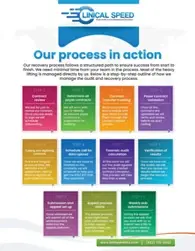
Our process in action

The recovery engagement follows a defined sequence designed so the healthcare organization reviews and approves findings while Clinical Speed performs the operational work.

Start
STEP 01

Contract review:

The Clinical Speed agreement is reviewed and onboarding is scheduled when the parties are ready to proceed.

STEP 02

Determine Payer Contracts:

Clinical Speed works with the organization to identify the relevant payer contracts for the engagement.

STEP 03

Contracts transfer meeting:

A scheduled walk through guides the team through the contract-upload process.

STEP 04

Payer contract validation:

Uploaded contracts are verified and reviewed before coding begins.

STEP 05

Coding and digitizing contracts:

Submitted contracts are converted into financial calculators, typically taking four to six weeks after receiving the complete contract set.

STEP 06

Data Upload:

Upload 835 and claim/EOB data near contract-coding completion. Connect 837 files or equivalent extracts at the agreed integration point.

STEP 07

Forensic audit calculation:

Once contracts and files are ready, the forensic calculation against the contract calculator generally takes less than a week.

STEP 08

Verification of results:

The organization reviews the 835 findings before recovery begins. No appeal file moves without that review.

STEP 09

Submission and appeal set up:

Verified underpayments are loaded into the appeal platform.

Done
STEP 10

Appeal Process and Weekly Cadence:

Appeals begin after submission. Results are reported weekly, and new EOBs continue to flow on the agreed cadence so the recovery book remains current.

Revenue-cycle analyst reviewing claim findings across monitors

Who the Recovery Platform Serves

The 835 recovery offering serves hospitals and health systems, surgery centers, urgent care, general medical practices, and specialty clinics. The recovery team works with independent facilities as well as large multi-hospital systems.

One Closed-Loop Model

The 835 and 837 surfaces share the same contract foundation. Historical adjudication patterns can inform future 837 risk intelligence, while current-period 837 findings bring contract visibility earlier in the claim lifecycle. Recovery and prevention operate from the same executable contract models.